
Rencontre avec : Marion Game

109181.jpg-r_1920_1080-f_jpg-q_x-xxyxx.jpg
Marion Game ©JLPPA / Bestimage

Si Marion Game a su se rendre indispensable à la télévision avec son rôle d’Huguette dans la série Scènes de ménages sur M6, elle ne saurait se passer du théâtre. Nous l’avons rencontrée après une représentation de la pièce de Sophie Brachet C’est pourtant simple, qu’elle joue tous les soirs au théâtre Edgar, pour parler de comédie.

Qu’est-ce qui vous a incité à jouer dans cette pièce ?

Je connais très bien Luq Hamett, le directeur de ce théâtre et le metteur en scène la pièce. On a travaillé très longtemps ensemble, dans le doublage. Il jouait mon fils Brendon dans la série Beverly Hills. Luq fait partie de ma famille ! Quand il m’a proposé la pièce, je ne pouvais pas dire non. Mon personnage est intéressant, cette femme qui ne se rend pas compte que la vie est derrière elle. Elle continue à rêvasser d’un avenir… Elle n’est plus dans le coup mais elle veut faire son come-back. C’est touchant quelque part, dérisoire d’autre part. La vieille actrice qui ne se rend pas compte qu’il faut qu’elle dépose son bilan.

Est-ce compliqué, pour une actrice de votre génération, de trouver des personnages bien écrits ?

Continuer à lire … « Rencontre avec : Marion Game »

Rencontre avec : Murray Gold

Traduction française après la version originale

5b0180f12000004200b92141
Ben Whishaw (Norman Scott) et Hugh Grant (Jeremy Thorpe) dans la série A Very English Scandal ©BBC (British Broadcasting Corporation)

Murray Gold is a 5 time BAFTA nominated British composer. He has worked on shows such as Vanity Fair, Casanova and Queer as Folk. He is mostly known for his work on Doctor Who since it was renewed in 2005 and he only recently announced that he would be stepping down as the composer of the show. He is already back with new music for A Very English Scandal, the new tv series, about Jeremy Thorpe’s trial, directed by Stephen Frears. The show was premiered in France at the festival Séries Series and we had the great pleasure of sitting down with Murray Gold.

You’ve worked on Doctor Who for thirteen years, how did you manage to keep it fresh and come up with new ideas?

I don’t know, it’s like when you wake up in the morning, you talk to your friends on the phone and you have new funny things to say. I get really excited just sitting down and writing music for a new episode. Every episode was done so fast that it didn’t get time to really get stale you know? Even if it was 13 years on the same show, each episode was so different and so quick that I just had a lot of fun writing all that music.

Continuer à lire … « Rencontre avec : Murray Gold »

Rencontre avec : Marc Antolin

Traduction française après la version originale

tumblr_oxwy29iQpA1t96b19o3_1280.jpg
Marc Antolin © Steve Tanner

Marc Antolin is once again working with Emma Rice, as Kneehigh theatre company brings back The Flying Lovers of Vitebsk on stage. He steps back into the part of Marc Chagall in this musical about the painter’s artistic and personal life with his wife Bella. With shows such as Matilda, Peter Pan or Romantics Anonymous the actor keeps sharing with the British audiences varied and brilliant performances. We had the opportunity to talk to him on the final day of the London run of The Flying Lovers of Vitebsk, before he takes the show on a tour across the US and UK.

Is there a difference between playing a made up character and a real one like Marc Chagall ?

There is a massive difference, when you play a real character you have lots of research that you can do on that person. Especially with Marc Chagall there was so much information I could access : videos, pictures, books, so you sort of have a starting point. Whereas when you’re playing a made up character you have a free reign over what you can do with it. Which is quite exciting because then you can be as elaborate and imaginative as you wish. But the nice thing about playing real characters in theatre productions is that you still have a licence to enhance them slightly, because obviously if it’s a theatrical production like The Flying Lovers of Vitebsk they’re going to be bigger versions of that character. For example Marc Chagall didn’t speak english, he was Russian but Emma Rice, the director, allowed me to use my own accent because he was a working class painter. His wife, Bella is from a quite well-off family, they owned lots of jewelry shops and it’s quite nice, because of that, to have that difference of accents between the two characters in the show.

Do you need to identify with the character you’re playing ?

Continuer à lire … « Rencontre avec : Marc Antolin »

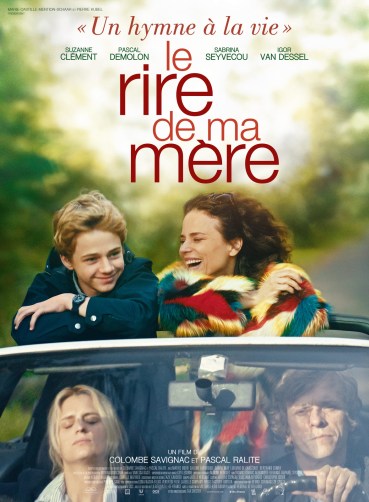
Rencontre avec : Colombe Savignac et Pascal Ralite

1075416

Le premier film de Colombe Savignac et Pascal Ralite, Le rire de ma mère, fait le portrait d’un adolescent timide qui se cherche après le divorce de ses parents, avant d’être confronté à une réalité douloureuse. Les deux cinéastes sont revenus pour nous sur la création de cette œuvre à la fois tendre et bouleversante, actuellement en salles.

Quels ont été vos parcours respectifs avant d’écrire et réaliser ce film ?

Colombe Savignac : J‘ai d’abord fait des études de lettres et théâtre. J’ai toujours voulu écrire et mettre en scène mais je ne connaissais personne dans ce milieu donc j’ai commencé par être stagiaire mise en scène. Comme mes parents ne pouvaient pas me soutenir, j’ai bossé pendant 10,15 ans en enchaînant les tournages et je n’avais plus le temps d’écrire. Puis, à un moment j’ai réalisé que je n’avais pas envie d’être assistante toute ma vie, je savais que j’avais envie d’écrire mais je n’avais pas de vraie formation de scénariste. J’ai vu qu’il y avait ce concours pour les plus de 25 ans à la FEMIS alors je l’ai tenté et ai eu la chance de l’avoir. C’était une expérience super et je me sentais mieux, ça m’a appris que j’avais le droit d’écrire, que j’étais légitime.

Pascal Ralite : Très jeune j’étais aussi assistant mise en scène, j’avais fait quelques courts-métrages. Comme Colombe je ne suis pas issu d’une famille très riche, et c’est une leçon dont il faut vraiment tenir compte dans la volonté de faire du cinéma. Lorsque vous devez travailler pour vivre, c’est très complexe d’y associer la création. Ecrire et monter un film demandent énormément de temps, et pendant cette période si vous avez des parents qui peuvent vous soutenir c’est tant mieux, c’est une chance. Si vous n’en avez pas il faut trouver des solutions. C’est le problème de beaucoup de jeunes qui veulent travailler en tant que réalisateurs mais se retrouvent obligés d’être techniciens.

Ces expériences vous ont-elles aidé dans la création d’un premier film ?

Continuer à lire … « Rencontre avec : Colombe Savignac et Pascal Ralite »

Rencontre avec : Louis Maskell

Traduction française après la version originale

DNZyGVyXUAE_WGC 2
Louis Maskell © Dan Wooller

Louis Maskell, making his West End debut this year, is the rising star of the British stage. The 28 year old actor’s interpretation of Grinpayne in The Grinning Man has been praised by both critics and audiences.

You’ve played characters such as Tony in the UK tour of West Side Story, what are the differences between getting into a musical that everyone already knows and a completely new one like The Grinning Man ? Is it more stressful because it’s new or, on the contrary, more relaxed because you can make it your own ?

There’s a definite mix. I’d say that for me the stress and relaxation that come with putting on an original production are far more positive emotions than negative.

Les Misérables is the longest running musical in London and is famous across the world. The Grinning Man is another adaptation of a Victor Hugo’s novel, why does his work so well as stage productions according to you ?

Well, because the themes Victor Hugo writes about are quite theatrical. His books are epic in scale and sweeping in nature!

Why do you think puppetry is so popular on stage ? As an actor, what’s the most challenging part about playing and manipulating them ?

Continuer à lire … « Rencontre avec : Louis Maskell »